

astral_ac
•
September 16, 2026
Understanding Airflow Direction in Linear Bar Grilles
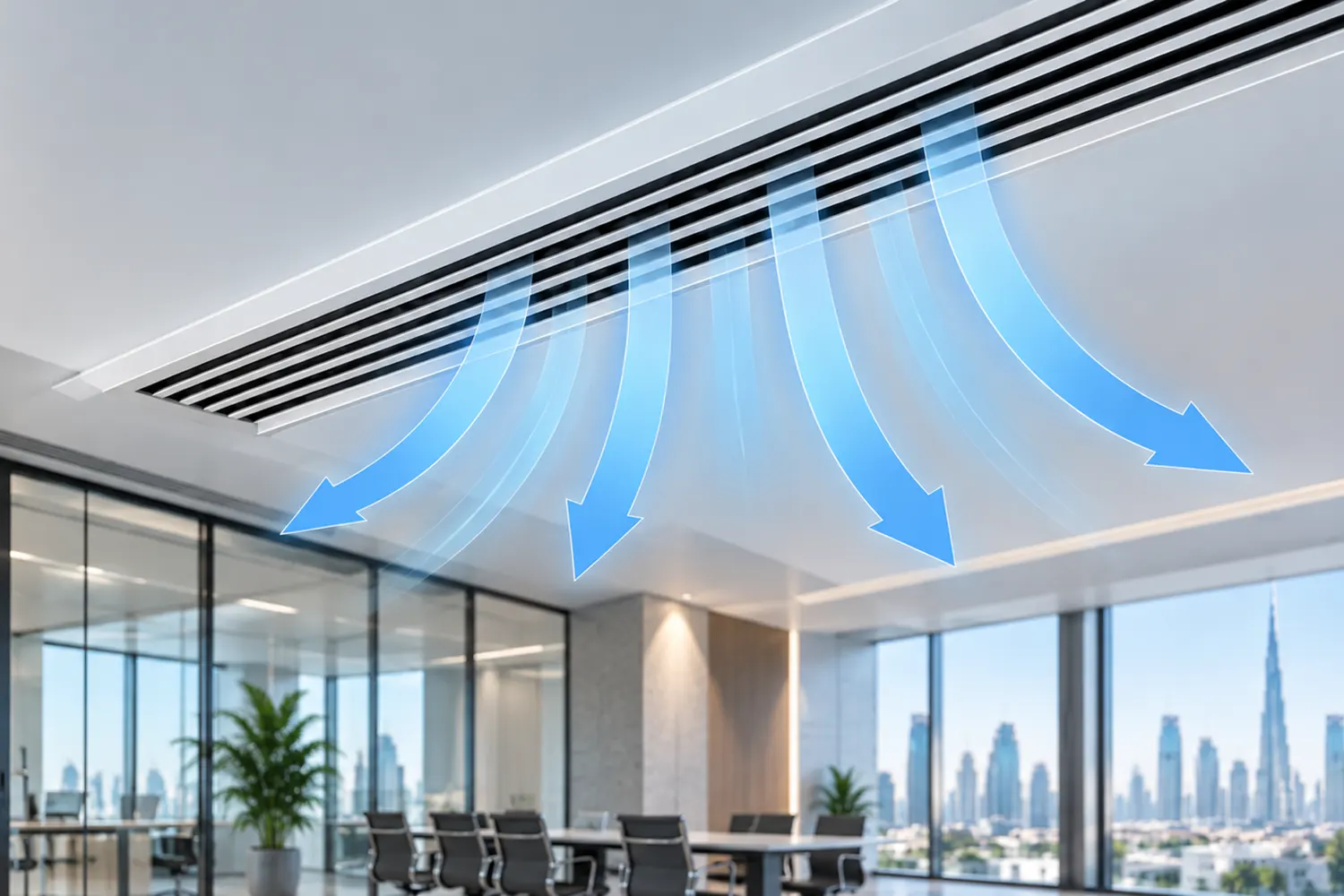
Linear Bar Grilles are designed to provide controlled air distribution while maintaining a clean architectural appearance. Understanding how airflow direction works is important when selecting and positioning these grilles for commercial, residential, hospitality, and industrial HVAC applications.
The blade arrangement and angle influence how supply or extract air moves through the grille. By selecting the appropriate blade configuration, HVAC designers can direct airflow according to the room layout, ceiling height, and comfort requirements. This makes Linear Bar Grilles a practical choice for projects where both airflow performance and architectural design are important.
What Are Linear Bar Grilles?
Linear Bar Grilles consist of parallel blades arranged within a continuous frame. They are commonly used for supply and extract ventilation and can be installed in walls, ceilings, or other suitable locations.
Their linear appearance allows them to blend with modern architectural interiors while providing flexibility in airflow direction. Depending on the design, the blades can be positioned at different angles to control the direction of discharged air.
How Does Airflow Direction Work?
The angle of the grille blades determines the path taken by the air as it leaves the grille. Adjusting the blade angle allows airflow to be directed toward different areas of a room.
For example, blades positioned at a neutral angle can provide a relatively straightforward airflow path, while angled blades can redirect air horizontally or toward a specific occupied zone. This flexibility can be particularly useful where furniture, partitions, walls, or other architectural features affect airflow distribution.
Adjustable Blade Angles
Linear Bar Grilles such as the AST-LB-S/R can be configured with different blade angles, including 0°, 15°, and 45°, allowing greater flexibility in airflow direction.
The appropriate angle depends on factors such as:
- Room layout
- Grille location
- Ceiling height
- Required air throw
- Occupied zone
- Supply or extract application
Correct blade positioning can help achieve more controlled air distribution throughout the space.
Why Airflow Direction Matters
Poorly directed airflow can result in uneven air distribution, uncomfortable drafts, or areas with insufficient ventilation. Properly selected and positioned Linear Bar Grilles can help distribute air more effectively across the intended space.
Airflow direction should therefore be considered alongside airflow volume, pressure drop, noise performance, and grille size when designing an HVAC system.
Applications of Linear Bar Grilles
Linear Bar Grilles are commonly used in:
- Commercial offices
- Hotels and hospitality spaces
- Retail environments
- Modern residential interiors
- Educational facilities
- Industrial buildings
- Architectural ventilation systems
Their clean linear profile makes them particularly suitable for projects where ventilation components need to integrate with contemporary interior designs.
Choosing the Right Linear Bar Grille
When selecting a Linear Bar Grille, consider the required airflow, installation position, blade angle, grille dimensions, material, and finish. The grille should also be coordinated with the ductwork and overall HVAC design.
Working with experienced HVAC manufacturers in UAE and HVAC suppliers in UAE can help ensure that the selected grille is appropriate for the project’s technical requirements. Air grille manufacturers in UAE and air grille suppliers in UAE can also provide different configurations for supply and extract applications.
Linear Bar Grilles for Modern HVAC Systems
Astral Air Conditioning Industry LLC provides air distribution and ventilation solutions for commercial and industrial applications. Its Linear Bar Grilles are designed to combine directional airflow control with a refined architectural profile.
As part of the wider HVAC industry, products from HVAC manufacturing companies in UAE, HVAC ventilation manufacturers in UAE, and ventilation products manufacturers in UAE support a variety of modern air distribution requirements.
Other components, including air diffusers, air louvers, metallic filters, and registers, can also be selected alongside Linear Bar Grilles to create a coordinated ventilation system.
Conclusion
Understanding airflow direction is essential when using Linear Bar Grilles in HVAC systems. Blade angle, grille position, room layout, and airflow requirements all influence how air is distributed.
By considering these factors during HVAC planning and working with experienced HVAC companies in UAE, designers and project teams can select suitable ventilation products that provide controlled airflow while complementing modern architectural spaces.